If you’re still manually booking DTDC shipments through their portal every day, you already know how tedious it gets. You log in, enter the order details, download the label, go back to your store, update the tracking number and then repeat that for every single order. At low volumes, it’s annoying. At high volumes, it’s a serious problem.
DTDC API integration for eCommerce changes that completely. Instead of managing shipments by hand, your store connects directly to DTDC’s system and handles booking, labels, and tracking automatically. In this guide, we’ll break down exactly how it works, why it matters for your business, and how Parcelmind.com makes the whole thing simple, no developer needed.
Table of Contents
What is DTDC API Integration for eCommerce?
About DTDC
Why eCommerce Businesses in India Need This
Key Features of DTDC
How Parcelmind.com Helps with DTDC Integration
Benefits of Using Parcelmind.com
Best Practices for DTDC API Integration
FAQ
What is DTDC API Integration for eCommerce?
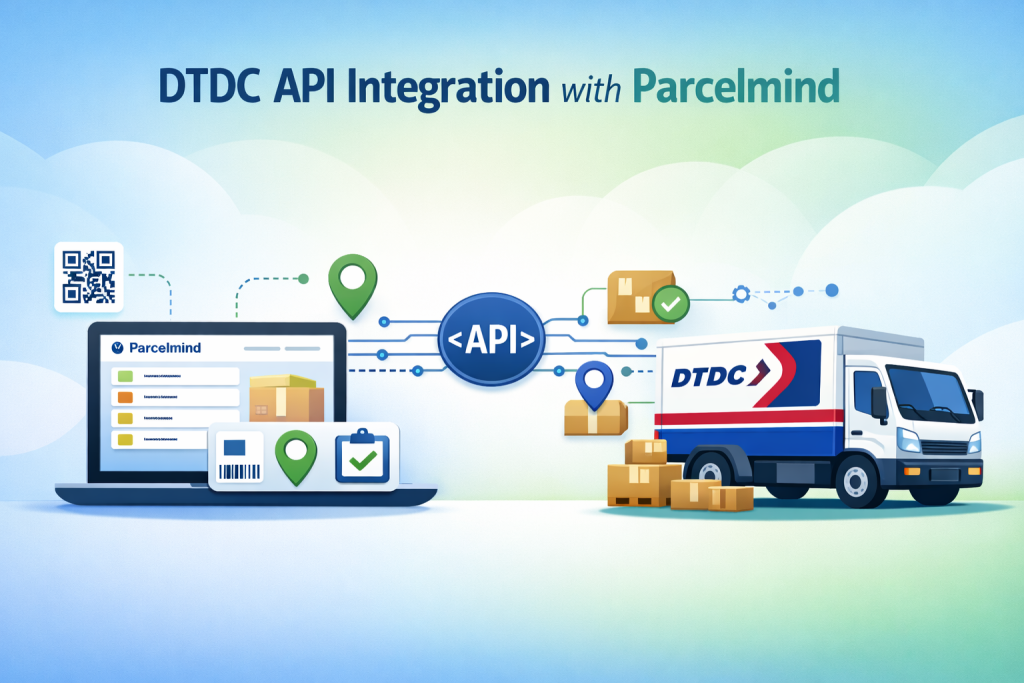
DTDC API integration for eCommerce is the process of connecting your online store directly to DTDC’s shipping infrastructure using their Application Programming Interface or API. Once that connection is in place, your store and DTDC’s system can talk to each other automatically.
What does that mean in practice? When a customer places an order, the details pass straight to DTDC without you doing anything. A shipping label gets generated, a tracking number gets assigned, and the customer gets notified, all without a single manual step on your end.
For DTDC API integration for online sellers in India, this is increasingly the standard way serious eCommerce businesses operate. Whether you’re on Shopify, WooCommerce, Wix, or any other platform, connecting to your courier through an API is what separates stores that scale smoothly from stores that hit a wall the moment order volumes climb.
About DTDC
DTDC has been around since 1990, which makes it one of India’s oldest and most established courier networks. Over three decades, it’s built a delivery reach that covers 17,000+ pin codes across the country, which is one of the broadest domestic networks you’ll find from any Indian courier.
What’s made DTDC a go-to choice for eCommerce sellers specifically? A few things. Their network depth means you can reach customers in smaller towns and rural areas that some couriers simply don’t serve well. Their pricing is structured for different business sizes, so you’re not overpaying when you’re still growing. And their service range covers everything from standard domestic parcels to express delivery and reverse logistics.
For sellers who need a courier that works reliably, whether the customer is in Mumbai or a small town in Rajasthan, DTDC tends to deliver
literally and figuratively. And with API access available, platforms like Parcelmind.com can plug directly into their system to fully automate your shipping workflow.
Why eCommerce Businesses in India Need This
Let’s be honest about what manual shipping actually costs you.
It’s not just time, though it is a lot of time. Every manual booking is a chance for a typo, a missed order, or a label printed with the wrong details. One wrong address means a failed delivery, a return shipment, an unhappy customer, and a hit to your RTO rate. Do that a few times a week, and it starts affecting your bottom line in ways that are hard to recover from.
India’s eCommerce market is growing fast. According to IBEF, the sector is projected to reach $111 billion by 2025, driven largely by Tier 2 and Tier 3 city growth. That growth is an opportunity, but only if your operations can keep up. Sellers who are still processing shipments manually at 200 orders a day aren’t just inefficient; they’re actively leaving growth on the table because they can’t physically handle more volume.
Here’s what manual shipping looks like when things go wrong:
- An order doesn’t get booked because someone forgot to log it in the courier portal
- A customer receives no tracking update and opens a complaint ticket
- A wrong address gets entered during copy-paste, leading to a failed delivery
- The daily manifest is missing an order because it was added after the handover
DTDC courier integration solves all of this. You build the process once, and it runs reliably every day, no matter how many orders come through.
Key Features of DTDC
Before diving into integration, it’s worth understanding what DTDC actually brings to the table for eCommerce sellers:
Extensive Pan-India Coverage
With 17,000+ pin codes in their network, DTDC reaches corners of India that many other couriers don’t. If your customer base is spread across the country, especially in Tier 2 and Tier 3 markets, this is a significant advantage.
Multiple Service Types
DTDC offers standard, express, and same-day delivery options depending on the route and shipment type. That flexibility lets you match the delivery speed to what your customers expect at checkout.
Reverse Logistics
DTDC handles return pickups alongside forward shipments, which keeps your reverse logistics workflow in the same system. For fashion, electronics, or any category with regular returns, this matters.
Real-Time Shipment Tracking
Every DTDC shipment comes with tracking that updates at each stage: booked, picked up, in transit, out for delivery, delivered. Your customers can follow their order without needing to contact your support team.
API Access for Third-Party Integration
DTDC provides API access that allows external platforms to connect with their shipping system. This is the foundation of any automated DTDC courier integration, and what makes tools like Parcelmind.com possible.
How Parcelmind.com Helps with DTDC Integration
Setting up DTDC API integration directly requires technical knowledge, development time, and ongoing maintenance every time DTDC updates their systems. For most eCommerce store owners, that’s not realistic. Parcelmind.com handles all of it so you don’t have to.
Here’s what the experience looks like on your end:
Simple Platform Connection Parcelmind.com works with Shopify, WooCommerce, Wix, and other major platforms. You connect your store once, and orders start syncing automatically. There’s no spreadsheet importing, no manual uploads, no back and forth between systems.
Centralised Dashboard: All your orders, labels, and tracking updates live in one place. Instead of juggling your store backend and the DTDC portal separately, you manage everything from a single Parcelmind dashboard, including any other couriers you use alongside DTDC.
Automated Label Generation: The moment an order is confirmed, Parcelmind.com generates your DTDC shipping label automatically. You print, pack, and hand over. That’s it.
Real-Time Tracking & Customer Notifications: Your customers receive automated tracking updates at every stage of their delivery. Fewer support tickets, fewer “where’s my order?” messages, and a much better post-purchase experience with almost no effort on your part.
Manifest Creation Parcelmind.com generates your daily DTDC manifest automatically, so your handover to the courier is clean and complete every time. No scrambling to put it together manually before pickup.
Want to get started? Install Parcelmind.com on Shopify →
Benefits of Using Parcelmind.com
Here’s what automation actually translates to in day-to-day operations:
- Faster fulfilment: Orders go out quicker because the manual steps are gone. Less time between order confirmed and label printed.
- Fewer errors: No more wrong addresses or missed bookings from manual data entry. The system picks up the order details directly from your store.
- Better customer experience: Automated tracking notifications keep customers in the loop without you doing anything. That alone reduces support volume significantly.
- Scalable operations: The same workflow that handles 50 orders a day handles 5,000. You don’t need to add headcount just to keep up with shipping as you grow.
- Centralised control: Manage DTDC and your other couriers from one dashboard full visibility across your entire shipping operation without switching between portals.
Best Practices for DTDC API Integration
Getting the integration set up is step one. Getting the most out of it takes a little more thought. Here’s what works well:
1. Verify your product weights and dimensions before going live. DTDC charges based on actual and volumetric weight, whichever is higher. Before you integrate, go through your product catalogue and make sure the weight and dimension data stored in your store is accurate. Incorrect data creates billing mismatches that take time to resolve.
2. Run a test batch before opening to full volume. Book 5-10 test orders through the integration first. Check that labels are generating correctly, tracking is updating as expected, and notifications are reaching your customers. It takes less than an hour and saves a lot of trouble down the line.
3. Set up your branded notification templates. Parcelmind.com lets you customise the automated messages your customers receive at each shipping stage. Take a few minutes to personalise these with your store name and a friendly tone. It’s a simple change that makes your post-purchase experience feel much more professional.
4. Review your NDR report weekly. Even with a solid courier, some deliveries fail due to wrong addresses on the customer’s end, nobody home, or building access issues. Check your Non-Delivery Report at least once a week and action the failed deliveries quickly. The faster you follow up, the lower your RTO (Return to Origin) rate and your RTO rate directly affects your margins.
5. Archive your daily manifests. Download and save your DTDC manifests each day. If there’s ever a question about a missed pickup or a damaged parcel, having that documentation resolves it much faster.
FAQ
What is DTDC API integration for eCommerce? DTDC API integration for eCommerce connects your online store directly to DTDC’s shipping system. It automates order booking, label generation, and tracking updates so the process runs without any manual steps on your end.
How do I integrate DTDC courier with Shopify? The quickest way to integrate DTDC courier with Shopify is through Parcelmind.com. Install the app from the Shopify App Store, connect your DTDC account, and your orders will start syncing automatically, no coding or technical setup required.
Why use Parcelmind.com instead of setting up the DTDC API directly? Direct API integration requires a developer to build and maintain the connection. Parcelmind.com gives you the same automation through a ready-to-use platform that works out of the box, and it supports multiple couriers in one dashboard, not just DTDC.
Does Parcelmind.com support international shipping with DTDC? DTDC’s primary strength is its domestic India network. Parcelmind.com fully supports its pan-India coverage. If you need international shipping, other couriers can be added to your Parcelmind dashboard to run alongside DTDC.
Is Parcelmind.com free to use? Parcelmind.com offers plans suited to different order volumes. Check the latest pricing and free trial details on the Shopify App Store listing.
How long does DTDC take to deliver? Delivery timelines depend on route and service type. For metro-to-metro shipments, DTDC typically delivers in 2–3 business days. For Tier 2 and Tier 3 cities, expect 3–5 business days on standard service.
Conclusion
DTDC’s pan-India network makes it one of the most practical courier options for eCommerce sellers who want to reach customers across the country but without proper integration, you’re leaving a lot of operational efficiency on the table. Manual booking slows you down, introduces errors, and simply doesn’t hold up as your order volumes grow.
With Parcelmind.com, DTDC API integration for eCommerce takes minutes to set up. You get automated label generation, real-time tracking, customer notifications, daily manifests, and a centralised dashboard all running quietly in the background while you focus on the parts of your business that actually need your attention.
Ready to automate your DTDC shipping? Install Parcelmind.com on Shopify today →
Also read:
- Blue Dart API Integration Guide
- Ekart Logistics API Integration Guide
- Amazon Shipping India API Integration Guide
9 thoughts on “DTDC API Integration for eCommerce: A Complete Guide for Indian Sellers”